By
|
Getting your Trinity Audio player ready...
|
Some architectural styles are self-identified. Art Deco does something more muted. You see the clean vertical lines of a building, the symmetry of its façade, a stepped silhouette against the sky, and something strikes you as composed, deliberate, even before you have a word for it. That impression lingers a century after it made its debut. Few design movements have been as enduring, or as easy to identify, as Art Deco.
This is the story of where the style came from, what gives it its character, how it travelled the world and the quiet depth of its presence in Kolkata.
The birth of a modern style
Art Deco emerged in Western Europe in the 1910s and 1920s, at a time when much of the world was ready to move on from the past. It was eventually named after one event, the 1925 Exposition Internationale des Arts Décoratifs et Industriels Modernes, held in Paris. The name has a little history of its own. The look was then known as the “1925 style”, and the term Art Deco was not coined until a 1966 retrospective in Paris.
What it rejected in style tells you as much as what it embraced. The previous generation had preferred Art Nouveau, with its flowing organic curves inspired by nature. Art Deco went in the opposite direction – straight lines rather than curves, symmetry rather than asymmetry, and an open love of the machine age and the materials it made possible. It was modern in design, and it showed.
What is Art Deco?
Art Deco is all over the place, but it has a consistent visual language. Vertical lines pull the eye upwards. The façades are balanced by symmetry. Forms rise and recede, creating a sense of rhythm and height. The ornament is there, but restrained, clean, geometric and stylised. There are sunbursts, chevrons and zig-zags, applied with discipline rather than spread over every surface.
Materials were part of the appeal too. Chrome, glass, lacquer and polished stone brought interiors a sense of craft and permanence, while fitting a style that was fundamentally about designing for an industrial age. The effect was ornamental without being ostentatious, and orderly without being harsh. There was an understated elegance to it.
How the fashion changed and travelled
Art Deco spread across continents in less than 20 years. It influenced movie theatres, hotels, ocean liners, furniture and other commonplace items, but the skyscraper was its most audacious manifestation. The 1930 completion of New York’s Chrysler Building and the 1931 Empire State Building transferred the style’s love of stepped shapes and verticality into steel and stone. They continue to have some of the most recognisable silhouettes.
It was a dominant style for a relatively short time. Around World War II, its popularity declined, and mid-century modernism’s simpler vocabulary replaced it. But Art Deco never really vanished. Its fundamental principles – balance, verticality and restrained ornamentation – carried over into subsequent design. It has aged so well precisely because of that discipline. A style based on proportion rather than excess tends to endure.
Art Deco in Kolkata
Kolkata’s connection to the style runs deeper than most residents realise. Art Deco arrived in the city in the 1930s and continued to shape its buildings into the 1960s. One of its landmarks, the Metro Cinema on Chowringhee, opened in the mid-1930s and remains a familiar Deco presence in the centre of the city.
But the style’s real home here is residential. Across South Kolkata – in neighbourhoods such as Southern Avenue, Gariahat, Lake Gardens and Jodhpur Park – family homes from the 1930s and ’40s carry unmistakable Art Deco features: semi-circular balconies, porthole-shaped windows, vertical strips of glass lighting the stairwell, and sunrise motifs worked into grilles and gates. They are so much part of the streetscape that most people walk past without registering how distinctive they are. Kolkata is rarely named among the great Art Deco cities, yet its stock of these homes is quietly one of the country’s richest.
Why did a European style of the 1920s take such firm root here a decade or two later? Part of the answer is timing – a building boom in a growing city, and a generation of Kolkatans who wanted homes that felt modern and forward-looking rather than colonial. Art Deco gave them precisely that.
The style today
That instinct for architecture that feels composed, contemporary and lasting has not gone anywhere. A century on, the Art Deco vocabulary of balance, symmetry and vertical elegance still reads as refined, which is why it continues to find its way into new buildings.
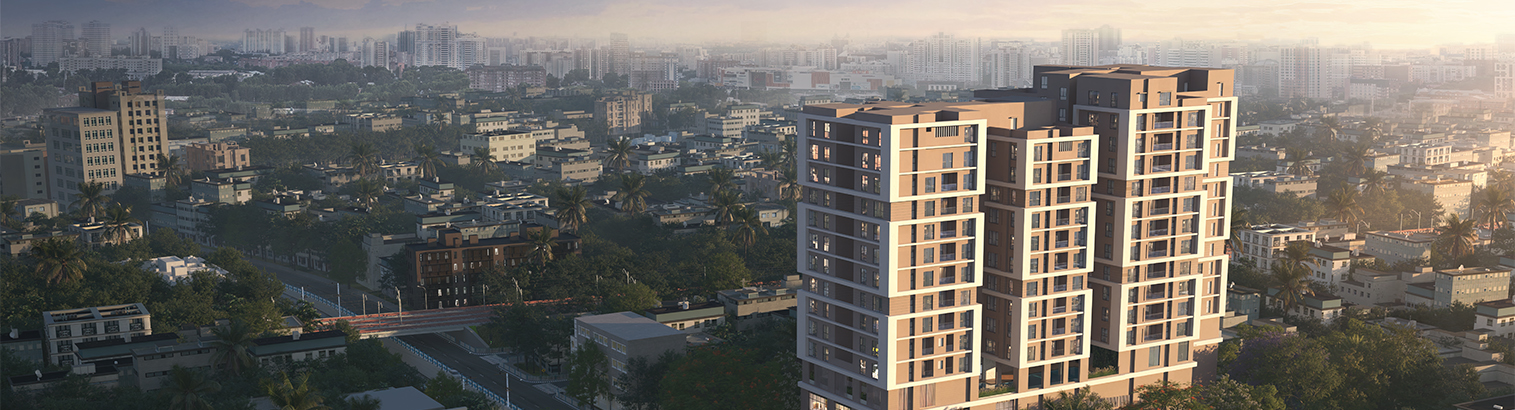
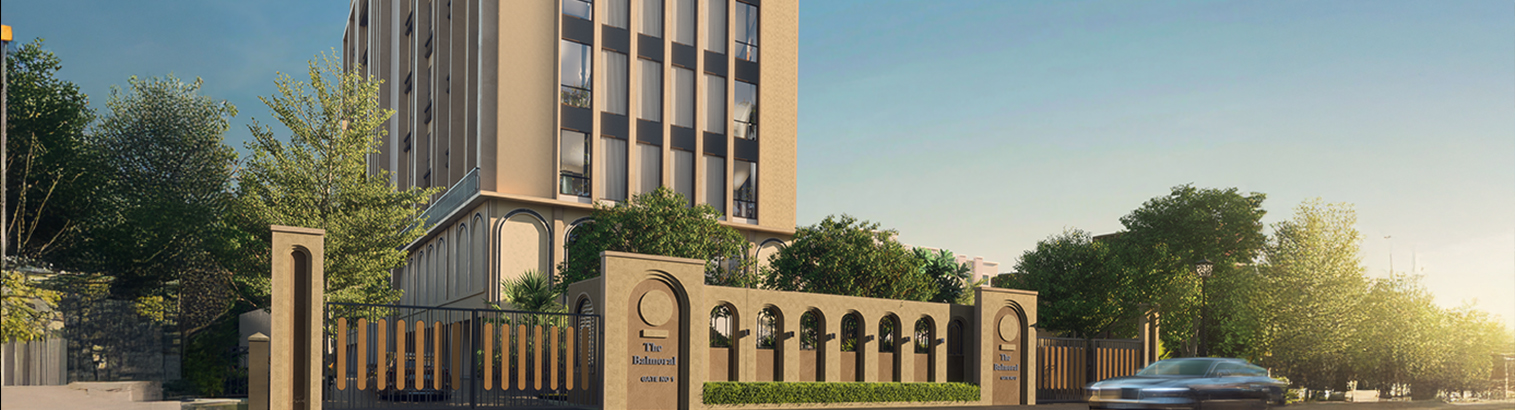
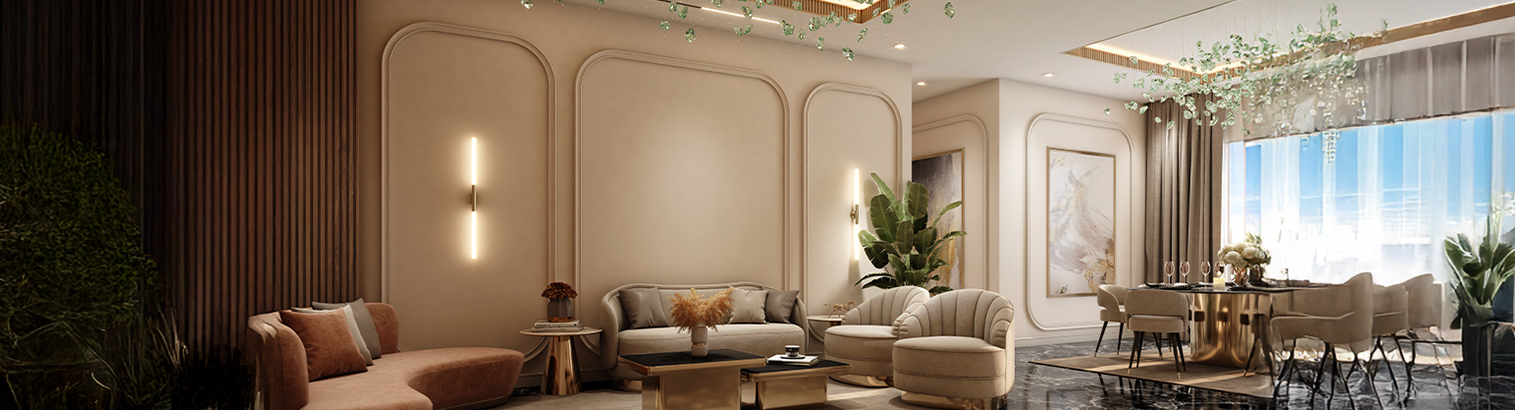
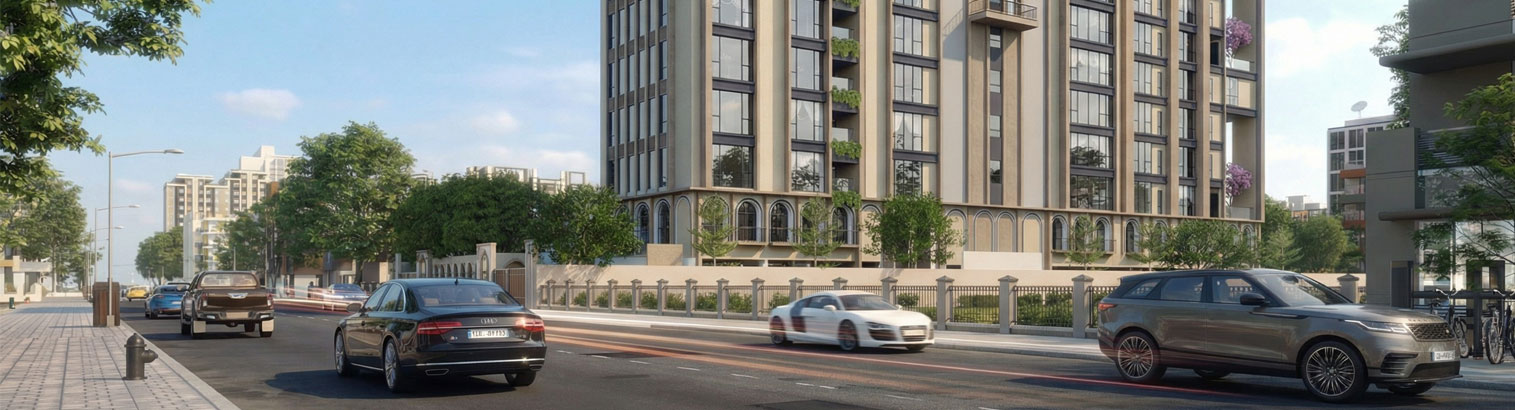
The Balmoral, a boutique residential address on Pretoria Street in central Kolkata, is one such instance. Its architecture draws on Art Deco principles – disciplined geometry, symmetry and a vertical, ordered façade – in a single G+9 tower of just fifteen homes.
What that looks like in practice is easier to see once you know what the style was doing. The emphasis on the building runs upward rather than across, so the tower reads as one composed height instead of a stack of floor plates – the same instinct behind the tall strips of stairwell glazing on a Southern Avenue house. The façade is balanced about its centre, with openings and solid surfaces held to a steady rhythm rather than arranged for variety. And the detailing is geometric and clean-edged: enough to give the elevation definition, restrained enough that the composure comes from the proportions rather than from anything applied on top of them. That restraint is the part most easily lost, and it is precisely what separated Art Deco from the ornamental styles it replaced.
The scale fits the tradition as well. Art Deco in Kolkata was primarily a residential language, worked out on individual family homes rather than on towers, and a single building holding fifteen homes sits closer to that domestic lineage than to the skyscraper strand of the style. It reads less as a revival than a continuation: the same design logic that shaped Kolkata’s Art Deco homes nearly a century ago, applied to how a small number of families might live now.
For a neighbourhood in the middle of the city, that lineage feels fitting. Art Deco in Kolkata was never imported spectacle; it was the everyday architecture of people who wanted something modern and enduring. A contemporary home built in the same spirit sits easily within that story.
Leave a comment